

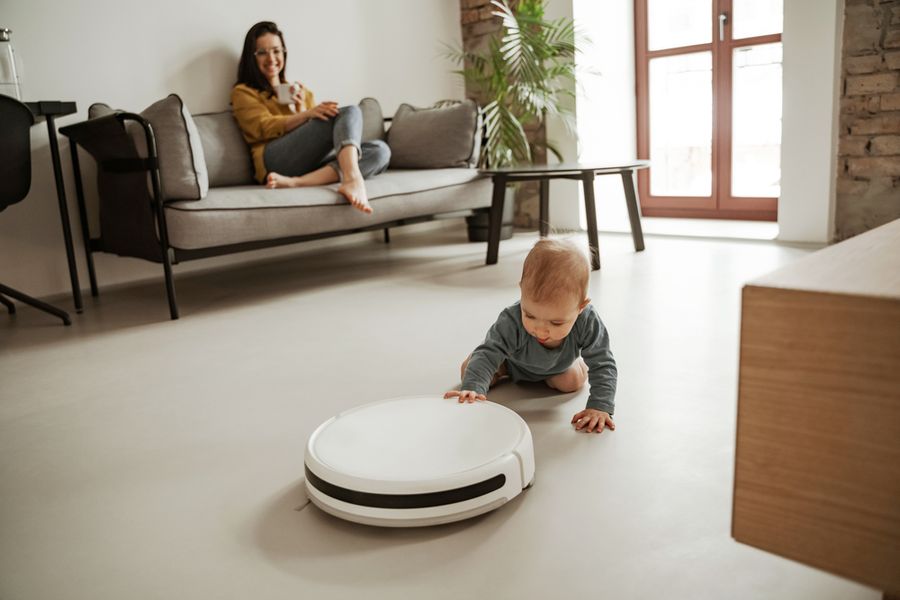
Robot vacuums have become a useful tool in many U.S. homes, helping save time and keep floors clean with little effort. But not all models deliver the same value. Some features make a real difference in performance and convenience, while others add cost without improving everyday cleaning. Knowing which robot vacuum features are truly worth it can help you choose a model that keeps your home tidy and fits your routine.
Smart Navigation and Mapping: Why It Matters
One of the most valuable features in a robot vacuum is smart navigation. Traditional random-bump robots push around until they hit walls and obstacles. In contrast, models with smart mapping learn the layout of your home and clean more efficiently.
A good example is the iRobot Roomba i7+ series, which uses mapping to create a floor plan and clean in neat rows. This helps ensure that the robot doesn’t miss spots or repeatedly clean the same area. Mapping also makes features like room-by-room cleaning possible, so you can tell the robot to clean specific rooms, not just the whole house.
Smart navigation saves time and energy by directing the robot to where it needs to go. It also helps with multi-room homes and complex layouts, because the robot remembers where furniture, walls, and doorways are.
Strong Suction Power and Brush Design
Another feature worth paying for is strong suction power paired with effective brush design. Suction determines how well a robot pulls dirt out of carpet fibers and up debris on hard floors. Brush design matters too: rubber brushes or dual-multi surface brushes are generally better at lifting hair and grit without tangling.
The Shark IQ Robot Self-Empty XL is known for its strong suction and self-cleaning brush roll, which can help reduce hair wrap on surfaces. This is especially important in households with pets or long-haired family members, where hair can build up quickly.
Features like carpet boost, where the robot automatically increases suction on rugs, are also practical. They improve cleaning without you needing to intervene. If you want better performance across floor types, strong suction and good brush design are worth the investment.
Self-Emptying Bins: Less Work, More Convenience
Emptying a robot vacuum’s dustbin after every session can feel like extra work. That’s why self-emptying bins are a feature many users find genuinely useful. Models equipped with this feature return to their home base and empty their contents into a larger bin in the charging station.
The Roomba i3+ and i7+ series both offer self-emptying capability, which stores weeks’ worth of dirt in a bag inside the base. You only need to empty the base bin occasionally, rather than cleaning the robot’s dustbin after every run.
If your goal is true hands-off cleaning, a self-emptying feature significantly reduces the time you spend maintaining the robot itself. For busy households or people who clean less often, this feature delivers clear convenience.
App Control and Voice Assistant Support
App control isn’t just a “nice to have,” it’s often a practical tool that makes scheduling, custom cleaning, and mode change easier. Good apps allow you to start or stop cleaning, view cleaning history, and set virtual boundaries all from your phone.
Many smart robot vacuums also work with voice assistants like Amazon Alexa or Google Assistant. The Roborock S7 for example pairs with an app that allows advanced mapping, scheduled cleanings, and no-go zones, and it also works with voice commands. Using voice control to start a clean while your hands are full adds a level of convenience that feels modern and helpful.
App features that let you divide rooms, block areas, or label zones (like “Kitchen” or “Living Room”) can be especially useful in larger homes or if you need different cleaning approaches for different spaces. These digital tools help you get more out of the robot without extra effort.
Multi-Floor Support and Height Detection
Homes with mixed floor types—hardwood, carpet, tile—benefit from robots that adjust cleaning power or behavior automatically. Premium models often include floor-type detection, so they adapt suction strength without manual setting changes.
Multi-floor support means the robot can store maps for more than one level of your home. This is handy if you have stairs and want consistent cleaning upstairs and downstairs. Without multi-floor maps, you’d have to re-map the home each time you change floors.
The Eufy RoboVac X8 Hybrid supports multiple cleaning modes and transitions between floor types smoothly. When a robot knows where it is and adjusts suction on its own, it saves you from frequent manual mode switching.
Maintenance Alerts and Long-Term Support
A feature many people overlook is maintenance alert support. Robots that remind you to clean brushes, sensors, or replace filters help keep performance high over time. Without alerts, parts can clog or wear down without your notice, which reduces cleaning power and can even lead to errors.
Models with stronger customer support and longer software updates also help maintain value. Firmware updates can improve navigation or add new features, extending the life of your robot.
Pick Features That Fit Your Life
Not all robot vacuum features matter equally. Smart navigation and mapping are worth paying for if you want thorough, consistent cleaning without gaps. Strong suction and well-designed brushes improve results on both carpets and hard floors. Self-emptying bins and app control save you time and effort, turning a robot vacuum into a truly convenient cleaning partner. Multi-floor support and maintenance alerts keep the robot working smoothly over months and years.
Before you choose, consider how you live and clean: Do you have pets? Mixed floors? Lots of daily traffic? When you match features to your real needs, you get a robot vacuum that works better and feels worth the investment in your daily routine.