

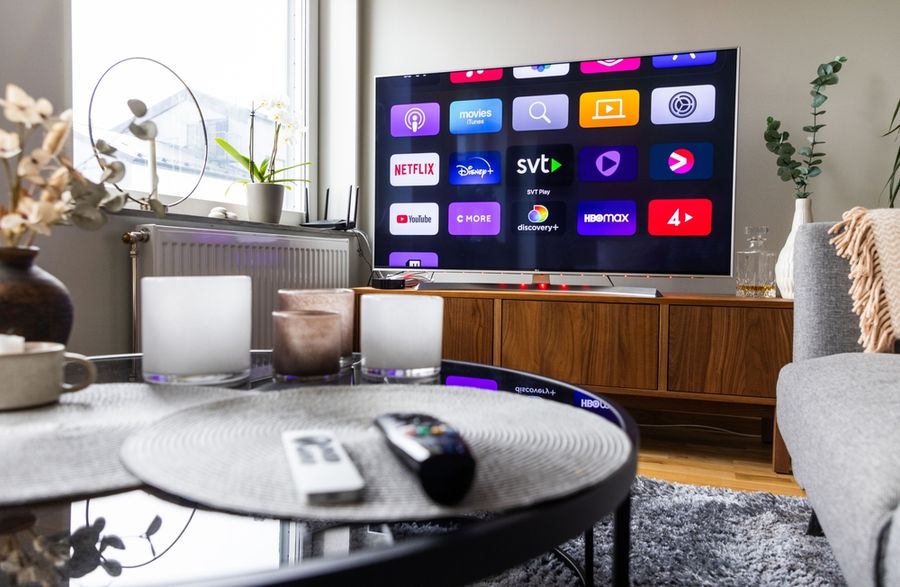
Shopping for a smart TV in the United States can feel like a trap. Every box promises “smart,” “AI,” and “next-gen,” but many upgrades do not help the way you actually watch TV. The goal is simple: pay for the screen and features you will use every week, and skip the rest. Understand which features matter most, which are easy to ignore, and how popular TV models fit common needs.
Start with the screen tech that matches your room
Picture quality comes mostly from the panel and backlight, not from flashy software features. If you watch in a darker room and care about deep blacks, OLED is hard to beat. LG’s C-series OLED models are often highlighted for strong contrast and gaming features in current “best of” lists, including the LG C5 in early 2026 coverage.
If your room is bright, a high-brightness Mini-LED or “Neo QLED” style TV may be a better fit because it can fight glare and keep the image bold.
What to skip: do not pay extra for “8K” unless you know you will use it. Most streaming and live TV is still 4K or lower, and 8K benefits are hard to see at normal seating distances.
Pay for the right HDMI features, not the buzzwords
If you game on a PlayStation 5, Xbox Series X, or a gaming PC, HDMI features can be worth real money. The ones that matter are 4K at 120Hz, VRR (helps reduce screen tearing), ALLM (auto low-latency mode), and eARC (better audio to a soundbar/receiver). These are commonly grouped under “HDMI 2.1” features.
What to skip: if you do not game, you likely do not need multiple HDMI 2.1 ports or very high refresh rates. A solid 4K TV with good motion handling can be enough for sports and movies.
Smart TV software: prioritize speed, app support, and updates
Most smart TV platforms can run Netflix, YouTube, Disney+, and Hulu. The real difference is how fast the TV feels, how often it gets updates, and how annoying the ads and menus are. Google TV, Roku TV, and Amazon Fire TV each have fans, but your best move is to pick the platform you already like or plan to replace it with a streaming box later.
What to skip: built-in “AI recommendations,” fancy voice features, or extra smart-home controls are rarely worth paying extra for. You can get most of that with a Roku, Apple TV, Fire TV Stick, or Chromecast later.
Know which upgrades actually change daily viewing
Some features improve everyday use a lot, while others only matter in special cases.
Features that often matter:
- Local dimming / Mini-LED (better contrast on many LED TVs, especially in mixed lighting).
- Good upscaling and motion (helps cable, sports, and older shows look cleaner).
- Wide viewing angles (important if people watch from the sides).
- A simple remote and quick settings (you will use this every day).
Top product examples that fit “value without overbuying”:
- Hisense U8N: often positioned as a high-performance, mid-range option with strong feature depth, including gaming-friendly inputs.
- TCL QM line (like QM8/QM8K): commonly praised for brightness and a strong set of features in its class.
- Amazon Fire TV Omni: sometimes recommended as a budget-friendly option in current buying guides, especially for people who want a simple smart TV experience and do not need top-tier HDR.
What to skip: built-in speaker “upgrades” marketed as cinema sound. Many TVs still benefit more from a basic soundbar than from paying extra for slightly better built-in speakers.
A quick “don’t overpay” checklist before you buy
Match the TV to your real habits. If you mostly stream shows at night, prioritize contrast and black levels. If you watch daytime sports with sunlight in the room, prioritize brightness and reflection handling. If you game, prioritize HDMI 2.1 features that support your console and a low-lag game mode.
Also, avoid paying for features you cannot name a use for. If a salesperson mentions a mode you will never turn on, that is a sign to step back. The best value TVs are often the ones that nail core picture quality, have reliable apps, and include the inputs you need—without piling on extras.
Buy for your room and routine, not the spec sheet
A smart TV is worth paying for when the upgrade improves what you see and how you use it every day. Focus first on the right screen type for your room, then add gaming features only if you will use them, and treat the smart platform as a convenience—not a reason to overspend.
Models like TCL’s QM line, Hisense’s U8N, and mainstream picks like Samsung’s QN90F and LG’s C-series show how different buyers can get great results by paying for the basics that match their routine.