

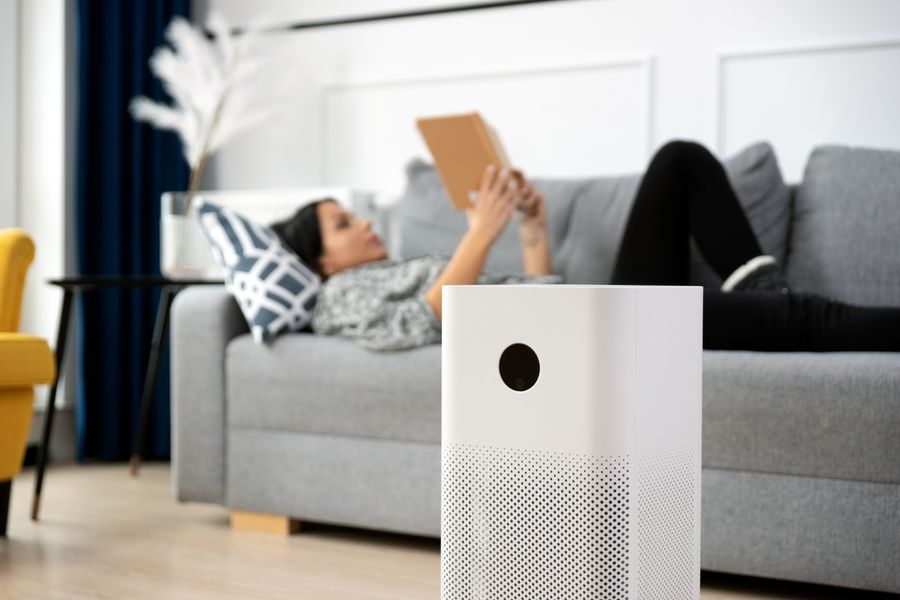
If you suffer from allergies, the air in your home can make a big difference in how you feel. Dust, pet dander, pollen, and other irritants can settle into carpets, upholstery, and corners where you spend most of your time. An air purifier designed to address allergy triggers can help clean the air you breathe daily. Choosing the right one means looking at features that focus on allergen removal and ease of use.
True HEPA Filters: The Most Important Feature
When buying an air purifier for allergies, the True HEPA filter is the number one feature to look for. True HEPA stands for High Efficiency Particulate Air, and these filters are proven to capture at least 99.97% of particles as small as 0.3 microns. This size range includes many common allergens like dust mites, pollen, mold spores, and pet dander. Without a True HEPA filter, an air purifier may claim to clean the air, but it might not remove tiny allergy-causing particles effectively.
Some purifiers use “HEPA-type” or “HEPA-like” filters, but these are not the same as True HEPA and generally don’t meet the same standards. For allergy relief, always choose a model with a certified True HEPA filter.
CADR Ratings: How Fast It Cleans the Air
Another key feature is the CADR rating, which stands for Clean Air Delivery Rate. CADR tells you how quickly the purifier can clean the air in a room. Ratings are given separately for smoke, pollen, and dust—three common types of particles. Higher CADR numbers generally mean faster cleaning.
In the United States, you’ll often see CADR ratings listed by manufacturers. When comparing purifiers, check the CADR values and choose one that matches the size of the room where you plan to use it. A unit with low CADR in a large room may struggle to keep allergens under control.
Activated Carbon Filters: Tackling Odors and VOCs
While HEPA filters are excellent for particles, they don’t remove smells and many gases. That’s where activated carbon filters come in. These filters are made from porous carbon that can trap odors from pets, cooking, smoke, and even some volatile organic compounds (VOCs) that come from paints or cleaning products.
If you or your family are sensitive to smells or live in a home with pets, look for an air purifier that combines a True HEPA filter with an activated carbon layer. This combo can improve both the smell and quality of your indoor air.
Filter Replacement Indicators and Ease of Maintenance
Air purifiers only work well if you keep their filters clean and change them when needed. A good allergy-focused model will include a filter replacement indicator that tells you when it’s time to swap filters. Without this feature, you might forget and end up using a purifier that is clogged and less effective.
Also pay attention to how easy it is to replace the filters. Some designs allow quick access without tools, while others require more work. Air purifiers should be simple to maintain because regular maintenance ensures better performance over time.
Room Size and Placement Matter
When choosing an air purifier, it’s important to match the unit to the size of your room. Most purifiers list a recommended room size in square feet. For example, a bedroom, living room, or home office each needs a purifier suited to its space. Using a purifier that is too small for a room means it won’t circulate and clean the air effectively.
Placement also matters. Place your air purifier where you spend time, like near a bed or seating area. Avoid putting it right against walls or in corners where airflow can be blocked. Allowing space around the intake and output vents helps the purifier pull air through the filters more efficiently.
Noise Levels and Daily Use
An air purifier that works well for allergies might run for many hours a day. Because of this, noise level is a feature worth considering. Some units are quieter than others, especially on lower fan settings.
Look for models that list decibel levels or have a “quiet mode.” A loud purifier can be distracting in a bedroom or home office, but many modern air purifiers balance power and quiet operation so they can run while you sleep or work without drawing attention.
Smart Features and Controls
Many newer air purifiers offer helpful smart features such as air quality sensors, automatic fan speeds, and app controls. An air quality sensor can adjust the fan speed based on the amount of particles detected in your home. This ensures that the purifier works harder when needed and saves energy when the air is cleaner.
App controls can let you check air quality or adjust settings from your phone, which is useful if you want to monitor performance throughout the day. While smart features are not required for good allergy relief, they can make using your air purifier easier and more convenient.
Choose Features That Match Your Needs
When buying an air purifier for allergies, focus on features that matter for performance and long-term use. A True HEPA filter and strong CADR rating are essential for capturing allergens.
An activated carbon filter helps with odors and gases, while filter indicators and easy maintenance keep the unit working well over time. Room size, noise level, and smart controls help ensure the purifier fits your daily routine. By choosing the right combination of these features, you can make your home air cleaner and more comfortable for allergy relief.